
Why Do Mice and Rats Keep Coming Back?
If mice or rats keep coming back after you've trapped or removed them, the problem may not be the rodents you've already caught. Something around your property may still be providing food, water, shelter, or access to your home.
That's why recurring rodent activity often requires looking beyond the individual mouse or rat.
Around North Texas homes, rodents can find plenty of places to travel, feed, and hide—from fences and landscaping to garages, sheds, attics, and areas around outdoor equipment. As we move from the heat of summer into fall, changing weather and available resources can also influence where rodents spend their time.
Understanding why rodents are attracted to your property in the first place is an important part of keeping them from becoming a recurring problem.
Why Do Rodents Come Back After You've Caught Them?
Catching a mouse or rat removes that particular rodent, but it doesn't necessarily remove the conditions that brought it to your property.
If rodents can still find food, water, shelter, or an easy way into the home, additional activity may follow.
For example, a homeowner may successfully trap a mouse in the garage but still have a damaged garage-door seal that provides an opportunity for another mouse to enter. Likewise, removing a rat from the yard doesn't eliminate nearby food sources or sheltered areas that may continue attracting rodents.
This is why recurring rodent problems are often better approached by asking:
What is allowing or encouraging rodent activity here?
rather than simply:
How do I catch this rodent?
Still Seeing Mice or Rats?
If rodent activity keeps returning, there may be more going on around your home than what you're seeing. Myles Pest Services can help identify rodent activity and determine what may be contributing to the problem.
Are Traps Enough to Get Rid of Mice or Rats?
Traps can be useful for addressing individual rodents that have already entered a home, but trapping alone may not address the reason rodents are there.
If you continue seeing rodents or signs of activity after trapping, there may be another issue that needs attention.
That could include:
An entry opportunity that hasn't been identified
Food or water sources around the property
Shelter in landscaping, garages, sheds, or cluttered areas
Outdoor rodent activity near the home
Conditions that continue making the property attractive to rodents
The goal shouldn't simply be to catch rodents as they appear. It should also be to understand why they are appearing and what can be changed to reduce future activity.
What Keeps Attracting Rodents to a Home?
Rodents are looking for the same basic resources most animals need: food, water, and shelter.
Some of the things around a North Texas property that can contribute to rodent activity include:
Food Sources
Rodents may find food around:
Bird feeders and spilled birdseed
Pet food stored in garages or outdoors
Trash and recycling containers
Outdoor grills and cooking areas
Fallen fruit or nuts
Gardens
Animal feed
Food stored in garages or sheds
Even small amounts of accessible food can make an area worth investigating.
Water Sources
Outdoor water can also contribute to pest and rodent activity.
This may include:
Pet water bowls
Leaking faucets or irrigation
Standing water
Drainage areas
Birdbaths
Other consistently damp areas around the property
Shelter
North Texas properties can provide rodents with numerous protected areas.
Dense landscaping, wood piles, storage areas, sheds, garages, attics, and other sheltered spaces can give rodents places to hide from predators and weather.
If you're seeing rats or mice outside around your property, read Why Am I Suddenly Seeing Rats or Mice Outside My House? for a closer look at why outdoor rodent activity can increase around North Texas homes.
How Are Mice and Rats Getting Back Inside?
Mice and rats don't need a wide-open door to find their way into a structure.
Potential entry opportunities can develop around many parts of a home, including:
Garage doors
Exterior doors
Utility penetrations
Rooflines
Vents
Areas where different building materials meet
Damaged or deteriorating seals
Gaps around pipes, cables, and other penetrations
Garages deserve particular attention because they often provide rodents with both shelter and potential access deeper into the home.
An inspection can help identify signs of activity and areas around the structure that may deserve closer attention.
Not Sure Where Rodents Are Coming From?
Our team can evaluate activity around your property, look for conditions that may be contributing to the problem, and recommend the right next step for your home.
EXPLORE RODENT CONTROL OPTIONS
Does Fall Weather Make Rodent Problems Worse in North Texas?
Fall doesn't arrive all at once in North Texas.
October can still bring plenty of warm days, and rodents don't necessarily wait for freezing temperatures before their behavior changes.
As North Texas transitions from summer into fall, changes in temperature, rainfall, food availability, and shelter can influence where rodents travel and spend their time. Outdoor rodent activity can continue while changing conditions gradually make protected spaces around homes more appealing.
That's why early fall can be a useful time to look around your property before stronger cold fronts arrive.
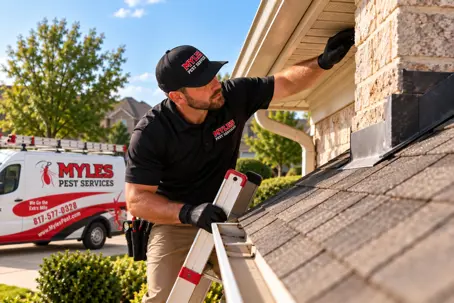
Check garage-door seals, exterior doors, utility penetrations, rooflines, storage areas, and other potential vulnerabilities. Addressing obvious problems now may reduce opportunities for rodents later in the season.
For more seasonal prevention tips, see Keep Rodents Out When Temperatures Drop in North Texas.
What Are Myles Technicians Seeing Around North Texas Homes?
Our technicians commonly see rodent activity around fences, garages, sheds, landscaping, and other areas that provide rodents with travel routes or shelter.
An outdoor sighting doesn't automatically mean rodents are living inside your house.
In many cases, the first signs homeowners notice occur outside. That makes exterior activity worth paying attention to, especially if sightings become more frequent or begin moving closer to the structure.
When evaluating a rodent concern, our team looks at the bigger picture: where activity is occurring, what may be attracting rodents, and whether there are conditions around the property that could allow them to move closer to or inside the home.
That context helps determine what action, if any, makes sense.
How Can You Keep Rodents From Coming Back?
Reducing recurring rodent activity usually starts with making the property less inviting and limiting opportunities for rodents to enter.
Homeowners can:
Store pet food, birdseed, and other food in secure containers
Keep trash containers closed
Clean up spilled seed and outdoor food
Check garage-door and exterior-door seals
Look for obvious gaps or damaged areas around the exterior
Reduce clutter in garages and storage areas
Keep landscaping maintained near the structure
Correct accessible water sources where practical
Pay attention to repeated sightings, droppings, noises, gnawing, or other signs of activity
If rodents continue appearing despite these changes, a professional inspection can help determine where activity is occurring and what may be contributing to it.
Related Resources
Frequently Asked Questions
Why do mice keep coming back after I catch them?
Catching a mouse removes that individual animal, but another mouse may appear if food, shelter, or entry opportunities remain. If you repeatedly catch mice in the same area, look beyond the trap and consider what may be attracting them or allowing them to enter.
Does seeing one mouse mean there are more?
Not necessarily. A single mouse sighting doesn't tell you how many rodents are present. However, repeated sightings, droppings, gnawing, noises, nesting material, or other signs of activity can indicate that the problem deserves a closer look.
Are traps enough to get rid of mice?
Traps can help remove individual mice that have entered a home, but they don't necessarily address entry points or conditions attracting rodents. If mice continue appearing after trapping, identifying how they're getting in and what is attracting them becomes important.
Why do rats keep coming back to my yard?
Rats may repeatedly visit a property if they can find reliable food, water, shelter, or travel routes nearby. Birdseed, pet food, trash, outdoor cooking areas, dense landscaping, sheds, and other protected areas can all contribute to activity.
What attracts mice and rats to a house?
Rodents are primarily looking for food, water, and shelter. Accessible food, protected storage areas, garages, landscaping, water sources, and openings into the structure can make a property more attractive or easier for rodents to use.
When do rodents start coming inside in North Texas?
There isn't one specific date. North Texas weather can remain warm well into fall, and rodents can be active around homes throughout the year. Changes in temperature, food availability, rainfall, and shelter can influence their behavior, which is why checking potential entry areas before stronger fall and winter cold fronts arrive can be helpful.
Experience a Higher Standard of Pest Protection
At Myles Pest Services, we believe pest control should do more than solve today's problem. It should help protect your home for the long term.
For more than 35 years, North Texas homeowners have trusted us because we focus on honest recommendations, experienced technicians, thorough inspections, and proactive protection—not simply applying products.
Our Rodent Control services are designed to help identify rodent activity, address the conditions contributing to it, and provide proactive protection based on the needs of your home.
That's A Higher Standard of Pest Protection.
Ready to experience the Myles difference?