
Keep Rodents Out When Temperatures Drop in North Texas
Rats and mice don't suddenly become a problem when the first cold front arrives.
They're active around North Texas homes throughout the year. But as fall temperatures begin to drop, garages, attics, wall voids, sheds, and other protected spaces can become more attractive places to find food and shelter.
That's why fall is a good time to look at what's happening around your property before you hear scratching in the attic or find droppings in the garage.
Across communities like North Richland Hills, Keller, Southlake, Colleyville, Grapevine, Northlake, Roanoke, Trophy Club, Haslet, Fort Worth, and surrounding areas, fall weather can change quickly. A warm stretch can be followed by a strong cold front—and then temperatures may climb again.
You don't need to wait for winter to think about rodents. Paying attention to outdoor activity, potential entry points, and conditions around your home now can help you get ahead of problems later.
Need Help Now?
Already finding droppings, hearing noises, or seeing repeated rat or mouse activity around your home?
Myles Pest Services can inspect your property to help determine where rodent activity is occurring, how rodents may be getting inside, and what steps make sense for your home.
View Pricing & Service Options
Related Services
Why Do Rats and Mice Move Closer to Homes When Temperatures Drop?
Rodents need the same basic things throughout the year: food, water, and shelter.
Cooler weather doesn't change those needs, but it can change where rodents find the most favorable conditions.
Attics, garages, wall voids, storage areas, sheds, and other protected spaces can offer shelter from changing outdoor conditions. Homes can also provide access to food and water that may be harder to find elsewhere.
This doesn't mean every rat or mouse living outside will head indoors when temperatures fall.
It does mean a rodent already traveling around your property has more reason to investigate protected areas—and an accessible opening can make getting inside much easier.
Does One Cold Front Send Rodents Inside?
Not necessarily.
North Texas homeowners know that fall rarely means a steady march toward winter.
We can have cool mornings followed by warm afternoons, a strong cold front followed by another stretch of warmer weather, or weeks of relatively mild temperatures.
Rodent activity works much the same way: conditions matter more than a date on the calendar.
A single cold night doesn't automatically mean rats and mice will enter your home. Nearby food, water, shelter, surrounding habitat, and available entry points all play a role.
The more useful question is:
Are rodents already spending time close to your home, and do they have a way to get inside?
That's something you can start paying attention to before consistently cold weather arrives.
Where Do Rats and Mice Get Into North Texas Homes?
Rodents don't need a wide-open door to find their way inside.
Potential entry points can be located throughout the structure, including areas homeowners don't routinely inspect.
Our technicians may look for openings around:
- Rooflines, soffits, and fascia
- Roof intersections
- Exterior vents
- Utility penetrations
- Plumbing and HVAC lines
- Garage doors
- Exterior doors and thresholds
- Other gaps or damaged areas around the structure
Some of the most important areas aren't easy to see while standing on the ground.
That's why looking only around the foundation may not tell you the whole story.
Rodents can also take advantage of changing conditions around a home. A damaged vent, deteriorating material, or gap that wasn't previously accessible can create a new opportunity.
What Attracts Rodents Around Your Home?
Entry points are only part of the picture.
If rats and mice have easy access to food, water, or shelter around your property, they have more reason to spend time close to the house.
Conditions worth paying attention to include:
- Bird seed
- Pet food stored in accessible areas
- Open or overflowing trash
- Food residue around grills and outdoor kitchens
- Fallen fruit or nuts
- Accessible water sources
- Dense vegetation
- Overgrown landscaping
- Clutter and stored materials
- Protected areas beneath sheds or other structures
None of these automatically means you'll develop an indoor rodent problem.
But a property that consistently provides food and shelter can support more rodent activity around the home. And the more time rats and mice spend near the structure, the more opportunity they have to discover an opening.
Seeing rats or mice outside but aren't sure what it means?
Why Am I Suddenly Seeing Rats or Mice Outside My House?
What Are the Signs Rodents May Already Be Inside?
You may not see a rat or mouse running through the house.
Often, the first clues are the signs they leave behind.
Watch for:
- Droppings in garages, pantries, attics, or storage areas
- Scratching or scurrying sounds, especially at night
- Gnawing on stored items or food packaging
- Disturbed insulation
- Nesting material
- Evidence of activity around an opening
- Repeated signs in the same area
One unexplained noise doesn't automatically mean there's a rodent living in your wall.
Patterns are more useful.
Droppings that return after you've cleaned them up, repeated scratching in the same area, or continued activity after catching a mouse or rat can tell you there's more to investigate.
Already caught a rodent only to find signs of another?
Why Do Mice and Rats Keep Coming Back?
What Are Myles Technicians Looking For?
Rodent control involves more than finding a mouse or setting a trap.
When our technicians evaluate a property, they're trying to understand why rodent activity is occurring and how the property itself may be contributing to it.
That can include looking at:
- Where rodent activity has been noticed
- Droppings, gnawing, or other evidence
- Potential entry points
- Roofline and structural openings
- Travel routes around fences and landscaping
- Food and water sources
- Areas that provide shelter
- Signs that rodents may already be using the structure
Our technicians have seen rats and mice using fences, garages, sheds, landscaping, and other protected areas as they move around North Texas properties.
Seeing a rodent outside doesn't automatically mean it's living in your house. But understanding where activity is occurring in relation to the structure can help determine whether you're looking at normal outdoor activity, an entry problem, or conditions that could increase the likelihood of one.
Experience a Higher Standard of Pest Protection
At Myles Pest Services, rodent control isn't about simply putting out traps or bait and hoping the problem goes away.
It's about understanding where rodents are active, what may be attracting them to the property, and whether they've found a way inside.
When active rodent problems are present, our process begins with inspection and identification. Depending on what we find, service may include professional trapping, exclusion work to address entry points, and ongoing exterior bait-box monitoring for rats and mice.
The right approach depends on what's actually happening at the property.
That combination of inspection, professional service, prevention, and homeowner education is an important part of our approach.
That's what we mean by A Higher Standard of Pest Protection.
What Can You Do to Help Keep Rodents Out?
You can't control when the next North Texas cold front arrives, but you can make it harder for rats and mice to find what they're looking for around your home.
Here are a few places to start:
1. Check accessible entry points
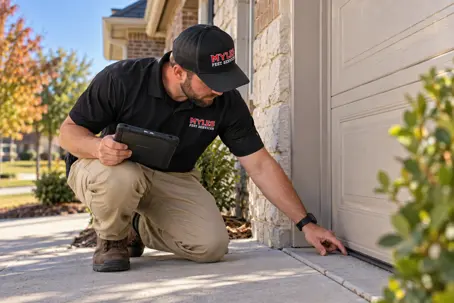
Walk around your home and look at garage doors, exterior doors, vents, utility penetrations, and other accessible openings.
Pay attention to damaged or deteriorating areas rather than only looking for obvious holes.
2. Reduce outdoor food sources
Store pet food and bird seed securely, keep trash containers closed, clean up food residue around outdoor cooking areas, and remove fallen fruit or nuts when practical.
The goal isn't to make your yard completely free of food. It's to avoid providing an easy, dependable food source close to the house.
3. Maintain landscaping around the home
Trim dense or overgrown vegetation and pay attention to areas where landscaping provides protected travel routes close to the structure.
This can also make it easier to notice droppings, burrows, gnawing, or other signs of activity.
4. Check garages and storage areas
Garages can provide shelter along with access to pet food, bird seed, cardboard, stored items, and other materials.
Periodically look behind stored items and along walls for droppings, gnawing, nesting material, or other signs that weren't there before.
5. Pay attention to repeated outdoor activity
One rat crossing the yard doesn't necessarily mean you have an indoor rodent problem.
Repeated activity close to the garage, foundation, roofline, or other parts of the structure deserves more attention.
Where you're seeing the activity can be just as important as the sighting itself.
6. Don't automatically seal an active opening
Finding a possible entry point doesn't always mean you should immediately close it.
If rodents are already using the structure, the current activity needs to be understood before exclusion work is completed. When active rodent problems are confirmed, Myles' current process uses inspection and identification first, followed by trapping when needed and professional exclusion.
Closing an opening without knowing whether an animal is already inside can create a different problem.
Do You Have to Wait Until Winter to Think About Rodents?
No.
And that's one of the most important things North Texas homeowners can take away from this article.
Rodents are already active outside before winter arrives.
Fall simply gives you a good opportunity to look at your home and property before colder conditions make protected spaces even more appealing.
If you're already seeing rats or mice along a fence line, around a shed, near the garage, or repeatedly close to the house, you don't have to wait until you hear something in the attic to start paying attention.
Rodent prevention can begin while the activity is still outside.
Continue Learning
- Why Do Mice and Rats Keep Coming Back?
- Why Am I Suddenly Seeing Rats or Mice Outside My House?
- What to Do If You Find Mouse Droppings in Your Garage or Pantry
- Scratching in the Walls at Night? How to Tell If It's Rodents
Related Services
Frequently Asked Questions
Do rats and mice come inside when it gets cold?
They can, but colder weather is only one factor. Rats and mice are active around North Texas properties throughout the year. As temperatures fall, sheltered areas such as garages and attics may become more attractive, especially when rodents can also find food, water, and an accessible way inside.
When do rodents start coming inside in North Texas?
There isn't a specific date. North Texas can stay warm well into fall, and rodents may already be active around homes during warmer months. Changing temperatures can increase the appeal of protected spaces, which is why fall is a useful time to check for activity and potential entry points before winter.
Does one cold front cause rodents to enter homes?
Not necessarily. One cold front doesn't automatically send rats and mice indoors. Rodent activity is influenced by temperature along with food, water, shelter, surrounding habitat, and access to the structure. Repeated activity close to the home and available entry points are more useful indicators to watch.
Where should I check my house for rodent entry points?
Check accessible areas around garage doors, exterior doors, vents, utility penetrations, plumbing or HVAC lines, and the roofline. Some rodent entry points may be above eye level or difficult to see from the ground, which is why a more thorough inspection may be helpful when indoor activity is suspected.
Should I seal a hole if I think a rat or mouse is using it?
Not automatically. If a rodent is already inside, it's important to determine what's happening before closing an active opening. Trapping may need to take place before exclusion work is completed so the current rodent activity can be addressed properly.
Does seeing a rat outside mean I have rats inside?
No. Rats and mice naturally live outdoors, so an outdoor sighting doesn't mean they're living inside your home. Repeated activity close to the structure, especially when combined with droppings, noises, gnawing, or other indoor signs, gives you more reason to investigate.
What attracts rats and mice to a house?
Food, water, and shelter can all contribute to rodent activity. Around a home, that can include pet food, bird seed, trash, outdoor cooking areas, dense vegetation, stored materials, sheds, and protected spaces. An accessible structural opening can then give a rodent that's already nearby an opportunity to move inside.
Can I prevent rodents before I have a problem inside?
You can take steps to reduce the opportunity. Securing food sources, maintaining landscaping, watching for repeated outdoor activity, and identifying potential structural openings can all help. For homes with ongoing rat or mouse pressure, exterior monitoring may also be appropriate depending on the property. Myles' Rodent Maintenance Plan uses tamper-resistant exterior bait stations to monitor activity and help reduce rodent pressure over time.
Experience a Higher Standard of Pest Protection
At Myles Pest Services, we understand that rodent activity in North Texas doesn't begin with the first cold front.
Rats and mice can be active around homes throughout the year, which is why effective rodent control starts with understanding what's happening around the property—not simply reacting after a rodent gets inside.
Since 1989, we've helped homeowners throughout North Richland Hills, Keller, Southlake, Colleyville, Grapevine, Northlake, Roanoke, Trophy Club, Haslet, Fort Worth, and surrounding North Texas communities understand and address pest activity around their homes.
Our Rodent Control services are designed to identify activity, determine how rodents may be getting inside, address entry points when appropriate, and provide proactive protection based on the needs of the property. The current Myles process includes inspection and identification, targeted trapping when needed, professional exclusion, and optional ongoing exterior bait-box monitoring for rats and mice.
That's A Higher Standard of Pest Protection.
Ready to get ahead of rodent activity this fall?