
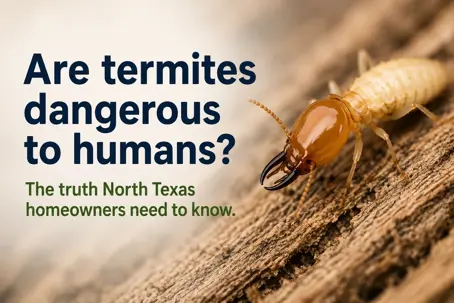
Are Termites Dangerous to Humans?
If you've found termites around your North Texas home, you may be wondering whether they can bite, sting, or otherwise hurt you.
The short answer is termites are generally not dangerous to humans. Soldier termites have jaws and are physically capable of biting, but termite bites on people are extremely uncommon. Termites aren't looking for humans or pets as a food source. They're looking for cellulose—the material found in wood and other plant-based materials.
For homeowners, the much bigger concern isn't whether termites can hurt you. It's what an established termite colony may be doing to your home while remaining largely out of sight.
Found termites or signs of termite activity around your home?
You don't have to figure out whether they're active—or how serious the problem is—on your own. Myles Pest Services provides professional termite inspections and termite control for North Texas homeowners.
Can Termites Hurt You?
Under normal circumstances, termites don't pose a direct physical threat to people.
Termites live in colonies and spend most of their time hidden in soil, wood, or the mud tubes they build to travel between the soil and a structure. Their behavior is focused on finding food, maintaining the colony, and protecting it—not seeking out people.
That means finding termites in your home doesn't mean you need to worry about them attacking you.
It does, however, mean it's worth figuring out why they're there.
Subterranean termites are a concern for North Texas homeowners because they can enter a structure from the soil and remain hidden while feeding on wood and other cellulose-based materials.
If you'd like a broader explanation of termite behavior, warning signs, and activity around North Texas homes, read our Everything North Texas Homeowners Need to Know About Termites guide.
Do Termites Bite Humans?
Termites are physically capable of biting, but termite bites on humans are extremely uncommon.
Soldier termites have jaws that help defend the colony against threats such as ants and other insects. Those jaws aren't designed for feeding on people.
Even when termites are active inside a house, homeowners typically aren't interacting directly with the colony. Subterranean termites usually remain concealed in soil, mud tubes, or the materials where they're feeding.
So if you're asking, "Do termites bite people?", the practical answer is that termite bites aren't something most homeowners need to worry about.
The potential damage to the house is a much more important concern.
Are Termite Bites Dangerous?
Because termite bites on people are so uncommon, they aren't considered the primary risk associated with a termite infestation.
If you have an unexplained bite, welt, or skin irritation, don't assume termites are responsible simply because you've also discovered termite activity around your property. A skin mark by itself isn't a reliable way to identify which pest caused it.
If you're concerned about a bite or physical reaction, a healthcare professional is the appropriate person to evaluate the symptoms.
From a pest-control standpoint, finding termites should shift your attention toward determining whether there is active termite activity in or around the structure.
What Does a Termite Bite Look Like?
There's no practical way for a homeowner to reliably identify a termite problem based on a skin mark.
Many insects and other conditions can cause small areas of redness or irritation, so attempting to identify a termite bite based on appearance alone can easily lead you in the wrong direction.
Instead, look for evidence of the termites themselves or signs of activity around your home.
For North Texas homeowners, those signs can include:
- Mud tubes along the foundation or other parts of the structure
- Winged termites, also called swarmers
- Discarded wings near windows, doors, or other light sources
- Wood that appears damaged or hollow
- Visible termite activity in or around wood
Seeing flying termites can be particularly confusing because they're sometimes mistaken for flying ants. If you've recently seen them around your home, read Do Flying Termites Mean You Have a Problem? to understand what swarmers may be telling you.
Are Termites Harmful to Pets?
Termites aren't normally a threat to dogs, cats, or other household pets.
Just as termites aren't looking for people as a food source, they aren't seeking out pets either. Their feeding behavior is centered on cellulose.
If you have pets and discover termites, the reason to investigate isn't because the termites are likely to hurt your animals. It's because visible termite activity can indicate that a colony is active somewhere nearby.
What Is the Real Danger From Termites?
The real concern with termites is property damage.
Subterranean termites can travel from colonies in the soil into a structure in search of cellulose. Because much of this activity occurs out of sight, termites can continue feeding without homeowners immediately realizing they're there.
That's what makes termites different from many of the pests you encounter around a home.
An ant trail across the kitchen counter is hard to miss. A wasp nest hanging from an eave is visible. Termite activity may be happening behind walls, around structural wood, or along hidden areas of the foundation.
By the time obvious signs appear, the colony may have been active for some time.
That's also why we don't recommend waiting for visible damage before taking termite activity seriously.
The bigger question isn't whether termites can hurt you. It's what they may be doing where you can't see them.
If you've found swarmers, mud tubes, damaged wood, or another sign of termite activity, a professional inspection can help determine what's happening and what—if anything—needs to be done.
Why Are Termites a Concern in North Texas?
Termites are a natural part of our North Texas environment.
The termites of greatest concern around our homes are subterranean termites, which live primarily in the soil and depend on moisture to survive.
Conditions around a house can make termite activity more favorable, including:
- Excess moisture near the foundation
- Poor drainage
- Plumbing or outdoor faucet leaks
- Wood that comes into contact with soil
- Mulch or landscaping that retains moisture near the structure
- Tree stumps or other cellulose materials near the home
- Soil or landscaping that provides concealed access to the structure
Termites don't show up because a home is dirty or poorly maintained. Even a well-maintained home can develop conditions that support termite activity.
You can learn more about those conditions in What Attracts Termites to Your Home.
What Should You Do If You Find Termites in Your Home?
First, don't panic.
Finding termites doesn't tell you by itself how extensive the activity is or how much damage may have occurred.
It does mean the situation is worth investigating.
Avoid disturbing visible mud tubes or termite activity more than necessary. Those signs can provide useful information during an inspection.
A professional termite inspection can help determine:
- Whether the insects are actually termites
- Where activity is occurring
- Whether there are conditions around the property supporting termite activity
- Whether treatment is appropriate
- What type of termite protection makes sense for the property
The goal isn't to scare homeowners into treatment every time an insect appears. It's to determine what's actually happening so you can make an informed decision.
Can You Prevent Termites?
You can't eliminate termites from the North Texas environment, but you can reduce conditions around your home that make termite activity easier.
Start by paying attention to moisture and access around the structure.
Homeowners can:
- Correct drainage problems near the foundation
- Repair leaking outdoor faucets or plumbing
- Keep gutters and downspouts working properly
- Reduce unnecessary wood-to-soil contact
- Avoid piling wood or cellulose materials against the house
- Watch for mud tubes and termite swarmers
- Have suspicious activity professionally identified
Regular awareness is particularly important because subterranean termites spend so much of their time hidden.
For a deeper look at prevention and the conditions termites prefer, see What Attracts Termites to Your Home.
How Is Termite Activity Treated?
The appropriate treatment depends on the home, the conditions around it, and the termite activity that is found.
At Myles Pest Services, we evaluate the property before recommending a termite-control approach.
One option for long-term termite protection is the Sentricon® termite baiting system. Stations are installed in the soil around the home and monitored over time. The system is designed to target termite colonies rather than simply treating the termites that happen to be visible.
Liquid termite treatments work differently by creating a treated zone in the soil around a structure.
If you're comparing the two approaches, we've broken down how they differ in Sentricon vs. Liquid Termite Treatments: What's the Difference?.
What Homeowners Often Get Wrong About Termite Danger
Finding Termites Doesn't Mean You're in Physical Danger
Termites aren't normally a threat to people or pets. Their ability to damage a structure is the reason an infestation deserves attention.
A Skin Mark Doesn't Prove a Termite Bit You
Termite bites on humans are extremely uncommon, and a skin mark isn't a reliable method of identifying the pest responsible.
Termites Don't Leave Typical Sawdust Piles
Subterranean termites consume wood rather than pushing sawdust out of galleries. Mud tubes, swarmers, discarded wings, and damaged wood are more relevant signs for North Texas homeowners.
Visible Termites May Be Only Part of the Activity
Subterranean termite colonies are primarily associated with the soil, and much of their activity can remain concealed. Seeing a few termites doesn't tell you the size or extent of the problem.
Related Termite Articles
- Everything North Texas Homeowners Need to Know About Termites
- Do Flying Termites Mean You Have a Problem?
- What Attracts Termites to Your Home
- Sentricon vs. Liquid Termite Treatments: What's the Difference?
- Termite Control in North Texas
Frequently Asked Questions About Whether Termites Are Dangerous
Are termites dangerous to humans?
Generally, no. Termites aren't considered a direct threat to people. Soldier termites are physically capable of biting, but bites on humans are extremely uncommon. For homeowners, the primary concern is the damage an established termite colony may cause to wood and other cellulose-based materials in the home.
Can termites hurt you?
Termites aren't normally a physical threat to people. They don't seek humans as a food source and typically remain hidden in soil, mud tubes, or wood. If termites are found in a home, the more important concern is determining whether there is active termite activity affecting the structure.
Are termite bites dangerous?
Termite bites on humans are extremely uncommon and aren't considered the primary danger associated with termites. If you have an unexplained bite or skin reaction, don't assume termites caused it based solely on the presence of termites in your home.
Is a termite bite harmful?
Termite bites aren't a typical concern for homeowners because termites rarely bite people. If you experience unexplained skin irritation or a reaction that concerns you, consult a healthcare professional rather than attempting to identify the cause from the appearance of the mark alone.
Do termites harm humans?
Termites generally don't harm humans directly. The greater risk is to property. Subterranean termites can remain hidden while feeding on wood and other cellulose materials, potentially causing damage before homeowners realize activity is present.
Do termites bite people?
Soldier termites have jaws and are capable of biting, but bites on people are extremely rare. Their jaws are primarily used to defend the termite colony from other insects rather than to attack humans.
Are termites harmful to pets?
Termites aren't normally dangerous to household pets. They feed on cellulose rather than people or animals. Finding termites around a home is primarily a property concern rather than a direct safety concern for pets.
Found Signs of Termites? Find Out What's Actually Going On.
Termites aren't usually dangerous to you—but an active colony can be a problem for your home.
If you've discovered swarmers, mud tubes, suspicious wood damage, or other signs of termite activity, Myles Pest Services can inspect your property, explain what we find, and recommend the appropriate next step based on the conditions around your home.
We've been serving North Texas homeowners since 1989, and our goal is simple: give you the information you need to make an informed decision about protecting your home.