
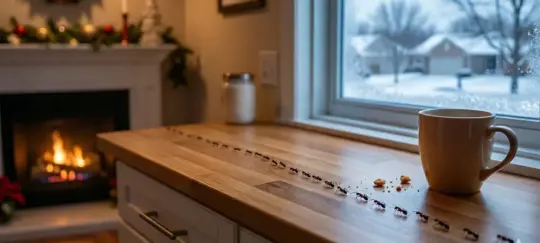
When winter arrives, many homeowners expect ants to disappear until spring. Fewer insects outside and cooler temperatures can make it feel like ant problems should pause for a few months.
In reality, ants often stay active indoors during winter, especially in mild Texas climates. Homeowners in Southlake, Westlake, and Trophy Club are often surprised to see ant trails in kitchens, bathrooms, or laundry rooms in January — even when it’s cold outside.
This doesn’t usually mean something is “wrong” with the home. It’s more often a sign of how ants adapt to changing conditions and why exterior-focused prevention plays such an important role year-round.
What’s Actually Going On
Ants don’t behave the same way in winter as they do during peak summer months, but they don’t simply disappear either.
In North Texas, winter temperatures fluctuate frequently. Cold snaps are often followed by warmer days, which allows many ant species to remain active rather than going dormant. When outdoor conditions become less reliable, ants shift their activity closer to stable environments — including inside homes.
During winter, ants are typically:
- Seeking steady warmth
- Following moisture sources
- Foraging for easily accessible food
Walls, slab foundations, and plumbing lines can hold residual warmth. Kitchens, bathrooms, and utility rooms often provide moisture and food particles ants need to survive. Even small, unnoticed entry points can allow ants to move indoors without being obvious at first.
This is why winter ant activity often shows up suddenly and feels unexpected.
What Homeowners Often Miss
Indoor ant activity during winter is commonly misunderstood. Many homeowners assume ants indoors mean something unusual or that a treatment failed.
Some common misconceptions include:
- “Ants should be gone in winter.” - In mild climates, many ant species remain active year-round.
- “Freezing temperatures kill ant colonies.” - During extended cold periods, ants may enter a dormant state called diapause. This is similar to hibernation, where ants slow their activity and survive on stored energy. Once temperatures warm again — even briefly — activity can resume.
- “Seeing ants means they’re nesting inside.” - Ants may forage indoors while nesting outside or beneath the slab.
- “Interior treatments alone should stop them.” - Without addressing exterior conditions, ants can continue exploring indoor spaces.
Understanding diapause helps explain why ants may disappear during a cold snap and then reappear during a warm-up. In most cases, this behavior reflects seasonal adaptation — not a worsening problem.
What Helps vs. What Usually Doesn’t
What Helps
- Exterior-focused prevention: Sealing entry points and treating pressure areas around the foundation helps limit access.
- Moisture management: Fixing leaks, improving drainage, and reducing condensation makes indoor areas less attractive.
- Consistent sanitation: Even small crumbs or residue can attract foraging ants in winter.
- Ongoing preventative service: Routine exterior treatments help reduce seasonal shifts in activity.
What Usually Doesn’t
- Interior-only treatments: Sprays may remove visible ants but don’t address the source.
- Waiting for activity to stop on its own: Ants may continue exploring until conditions change.
- Overusing store-bought products: Many provide short-term relief but inconsistent long-term results.
- Assuming winter sightings mean failure: Seasonal shifts are common, even with preventative care.
Effective ant control focuses on reducing opportunity rather than chasing trails as they appear.
How Myles Pest Services Approaches This
At Myles Pest Services, ant control is built around prevention, not reaction.
We use an exterior-first approach, focusing on where ants interact with the structure and why. Treatments are based on inspection findings and seasonal conditions, not assumptions.
Our process includes:
- Exterior treatments designed to reduce ant pressure around the home
- General Pest Control service every four months to help manage year-round activity
- Interior treatments only when activity or conditions call for it
- Free re-treats available between scheduled services if ants reappear
We don’t offer monthly services, and we don’t make guarantees. Ant activity can change with weather, moisture, and seasonal shifts. Our goal is to reduce recurring surprises and help keep activity manageable throughout the year.
When It Makes Sense to Call a Professional
Not every winter ant sighting requires immediate service. However, a professional inspection can be helpful when activity becomes persistent or confusing.
It may make sense to call when:
- Ants continue appearing despite basic cleanup
- Trails reappear in multiple areas
- Activity seems tied to moisture or plumbing
- You’re unsure whether ants are coming from outside
Calling early is usually about prevention and clarity, not urgency.
Frequently Asked Questions
Why do ants come inside when it’s cold?
Ants look for stable temperatures, moisture, and food when outdoor conditions fluctuate.
Does winter ant activity mean I have a nest inside?
Not necessarily. Ants often forage indoors while nesting outside or under the slab.
Will cold weather eventually stop ants?
Cold snaps may slow activity, but warmer days can bring it back.
Are winter ants a sign of poor sanitation?
No. Even clean homes can attract ants if moisture or access points are present.
Is winter a bad time for ant control?
No. Winter is often a good time to focus on prevention before spring activity increases.
Final Thoughts
Ant activity in winter can feel frustrating, especially when it seems out of season. In mild climates, however, it’s a normal shift in behavior rather than a sign of failure.
For homeowners in Southlake, Westlake, and Trophy Club, focusing on exterior prevention and long-term management often leads to fewer surprises — not just in winter, but year-round.