
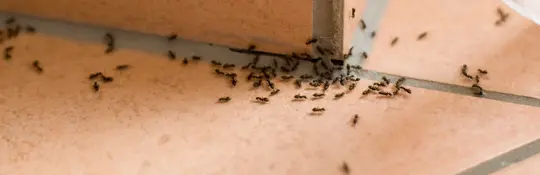
Many homeowners think of ants as a spring and summer issue. When temperatures cool, it’s common to assume ant problems should fade away until warmer weather returns.
In reality, ants remain active year-round in North Texas, and indoor activity often becomes more noticeable during cooler months. Homeowners in Grapevine, Coppell, and Bedford, including neighborhoods like Silver Lake Estates, Northlake Woodlands, and Oak Creek, are often surprised to see ants inside during winter.
This doesn’t mean something has gone wrong. It usually reflects how ants adapt to changing conditions and why long-term, exterior-focused prevention matters more than seasonal reactions.
What’s Actually Going On
Ants are highly adaptable insects. Their survival depends on access to food, moisture, and stable temperatures — not on the calendar.
In North Texas, winters are generally mild with frequent temperature swings. Instead of long freezes that force ants into dormancy, colonies often remain active beneath soil, slabs, or other protected areas. When outdoor conditions become less predictable, ants shift where they forage.
During cooler months, ants may:
- Move closer to foundations and slabs that retain warmth
- Follow plumbing lines or expansion joints indoors
- Increase indoor foraging when outdoor food sources change
This is why ants may suddenly appear in kitchens, bathrooms, or laundry rooms even when it’s cold outside. The activity is often part of a seasonal shift, not a new infestation.
Common Ant Behavior Throughout the Year
Ant activity changes as conditions change, but it rarely stops completely.
- Winter: Ants seek warmth and moisture, often leading to indoor sightings.
- Spring: Colonies expand and foraging activity increases.
- Summer: Outdoor activity peaks, but heat can push ants toward indoor moisture.
- Fall: Ants adjust patterns as temperatures fluctuate again.
This year-round cycle is why ant control works best when it’s proactive and consistent rather than tied to one season.
What Homeowners Often Miss
Ant activity is frequently misunderstood, especially when it happens outside of “ant season.”
Common misconceptions include:
- “Ants shouldn’t be active in winter.” - Many species remain active in mild climates, especially indoors.
- “Indoor ants mean the nest is inside.” - Ants often nest outdoors and forage indoors when conditions allow.
- “A past treatment should still be working.” - Most professional pest control treatments are designed to last around three to four months. Over time, weather, rain, irrigation, and normal wear reduce their effectiveness. This is why recurring, preventative service tends to work better than one-time treatments.
- “Seeing ants means there is a sanitation issue.” - Even clean homes can attract ants due to moisture, warmth, or access points.
Missing these realities can lead to frustration when ants reappear despite good housekeeping or previous service. In most cases, it’s a timing and prevention issue rather than a failure.
What Helps vs. What Usually Doesn’t
What Helps
- Exterior-focused prevention: Treating the foundation, entry points, and pressure areas reduces access before ants move inside.
- Moisture management: Fixing leaks, improving drainage, and reducing condensation makes homes less attractive to ants.
- Sealing access points: Small cracks, gaps, and expansion joints can allow ants to enter unnoticed.
- Ongoing preventative service: Routine treatments help manage seasonal shifts in activity.
What Usually Doesn’t
- Interior sprays alone: They may remove visible ants but don’t address the source.
- Waiting for the season to change: Activity often returns during the next temperature shift.
- Overusing DIY products: Results are often inconsistent and short-lived.
- Assuming winter sightings mean failure: Seasonal behavior changes are normal.
Effective ant control focuses on reducing opportunity, not chasing trails after they appear.
How Myles Pest Services Approaches This
At Myles Pest Services, ant control is built around long-term prevention, not short-term fixes.
We take an exterior-first approach, starting with inspection and focusing on the conditions that allow ants to access the home. Treatments are tailored to what we see, not based on assumptions.
Our approach includes:
- Exterior treatments designed to reduce ant pressure around the structure
- General Pest Control service every four months for proactive management
- Interior treatments only when activity or conditions call for it
- Free re-treats available between scheduled services if ants reappear
We don’t offer monthly services, and we don’t make guarantees. Ant activity changes with weather, moisture, and surrounding conditions. Our goal is steady, reliable reduction of recurring issues.
When It Makes Sense to Call a Professional
Not every ant sighting requires professional service. However, an inspection can be helpful when activity becomes persistent or confusing.
It may make sense to call when:
- Ants appear repeatedly across seasons
- Trails return after basic cleanup
- Activity is tied to moisture or plumbing
- You’re unsure where ants are entering
Professional guidance is often about prevention and clarity, not urgency.
Frequently Asked Questions
Why do ants keep coming back throughout the year?
Ants adjust their behavior based on temperature, moisture, and food availability rather than seasons alone. When outdoor conditions change, they shift where they forage.
Do ants completely stop during freezing weather?
During extended freezing temperatures, ants may enter a dormant state called diapause. This is similar to hibernation, where they survive on stored energy until conditions improve. Once temperatures warm again, activity often resumes.
Are year-round ants a sign of an infestation?
Not necessarily. Many colonies remain outdoors and forage indoors when conditions are favorable.
Can cold weather eventually solve an ant problem?
Cold snaps may pause activity temporarily, but they don’t eliminate colonies. Ants often reappear during warm-ups.
Do preventative treatments still help in winter?
Yes. Winter is often an effective time to reinforce exterior prevention before spring activity increases.
Final Thoughts
Ants are a year-round reality for many homeowners in North Texas. Seasonal changes don’t eliminate activity — they shift where and how ants interact with homes.
For homeowners in Grapevine, Coppell, and Bedford, a calm, prevention-focused approach helps reduce recurring surprises and makes ant activity more manageable over time.