
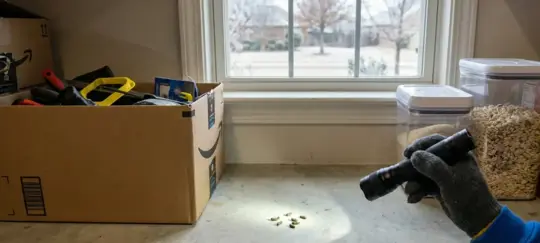
Finding mouse droppings in your garage or pantry can be unsettling. Even if it’s just a few small pellets near stored items or along a wall, it often raises immediate questions about what’s going on — and what to do next.
For homeowners in North Richland Hills, this situation is especially common during the winter months. Mild Texas winters don’t stop rodents from moving; instead, they push mice to look for stable shelter and easy access to food.
The good news is that droppings don’t automatically mean a serious infestation. Understanding what they indicate, what steps help, and when it makes sense to call a professional can help you respond calmly and effectively.
What’s Actually Going On
Mouse droppings are typically a sign of recent activity, not necessarily a long-term problem. Mice are curious and exploratory, especially when searching for warmth, food, or nesting areas.
In North Texas, winter temperatures fluctuate frequently. Cold nights followed by warmer days keep mice active rather than dormant. Garages and pantries often become points of interest because they offer:
- Shelter from wind and moisture
- Stored food or packaging
- Quiet, undisturbed areas
A mouse may pass through a garage or pantry several times before settling elsewhere. Droppings are left behind as part of normal movement and feeding, which is why they often appear along walls, corners, or near stored items.
What Homeowners Often Miss
Seeing droppings can lead to assumptions that don’t always match reality. Some common misunderstandings include:
- “Droppings mean mice are living inside my walls.” - Droppings may come from brief exploration rather than nesting.
- “If I clean them up, the problem is solved.” - Cleaning helps, but it doesn’t address how mice got inside.
- “One mouse isn’t a concern.” - Even single mice can indicate access points that allow future activity.
- “This only happens in older homes.” - Newer homes can have gaps or settling that allow access too.
Understanding these points helps homeowners take the right next step instead of reacting out of fear or frustration.
What Helps vs. What Usually Doesn’t
What Helps
- Careful cleanup: Wear gloves and clean droppings using appropriate disinfecting methods. Avoid sweeping or vacuuming dry droppings.
- Inspecting the area: Look for gnaw marks, disturbed packaging, or gaps along walls and doors.
- Securing food and storage: Store pantry items in sealed containers and reduce clutter in garages.
- Checking exterior access points: Garage door gaps, utility lines, and foundation edges are common entry areas.
What Usually Doesn’t
- Ignoring small amounts of droppings: Activity may continue quietly if access isn’t addressed.
- Interior traps alone: Traps may catch a mouse but don’t prevent new ones from entering.
- Relying on scent deterrents: Results are often inconsistent and short-lived.
- Assuming winter activity will stop naturally: Mild winters allow mice to remain active.
Practical steps work best when they focus on access and conditions, not just removal.
How Myles Pest Services Approaches This
At Myles Pest Services, mouse issues are handled with a prevention-first mindset.
We start with an inspection to understand where activity is occurring and why. The focus is on exterior access points and conditions that allow mice to enter in the first place.
Our approach includes:
- Exterior treatments designed to reduce rodent pressure around the home, including exclusions
- Rodent Maintenance service every four months for proactive prevention
- Interior trapping only when activity or conditions call for it
Rodent behavior changes with weather and surroundings. Our goal is to reduce repeat issues and help homeowners avoid ongoing surprises.
When It Makes Sense to Call a Professional
Finding droppings once doesn’t always require immediate service. However, professional help can be useful when signs continue or raise questions.
It may make sense to call when:
- Droppings reappear after cleanup
- Activity is found in both the garage and pantry
- Noises are heard at night
- You’re unsure how mice are getting inside
Calling early is usually about prevention and clarity, not urgency.
Frequently Asked Questions
Are mouse droppings dangerous?
Droppings should be cleaned carefully, but a small amount doesn’t automatically indicate a health emergency.
How many droppings mean I have a problem?
There’s no set number. Repeated findings over time are more meaningful than a single instance.
Can mice come in through the garage?
Yes. Garage doors and adjacent walls are common entry points.
Will cold weather get rid of mice?
You might actually notice more activity inside because of colder weather. Rodents find their way inside for warmth.
Is rodent control a one-time service?
Rodent control is most effective as an ongoing, preventative process.
Final Thoughts
Finding mouse droppings can feel alarming, but it’s often an early sign that gives homeowners a chance to act before activity escalates.
For homeowners in North Richland Hills, focusing on prevention, access points, and calm next steps often leads to better long-term results than reacting to a single discovery.